
As businesses grow, the gap between strategy and execution can widen.
Priorities compete. Decisions become harder. Systems and ways of working don’t always keep pace. Leaders carry more complexity, and people can lose sight of how their work connects to the bigger picture.
The result can be a strategy that is clear at the top, but is not consistently understood, translated or executed across the business. The gap rarely forms in one place. The first step is understanding where it is forming and what needs attention.
The problems are often obvious before the cause is.
Sometimes the strategic direction itself needs to be developed or strengthened. Other times, the direction seems clear, but execution is telling you something isn’t connecting.
These can look like separate problems. Often they are connected. The challenge is understanding where the gap is actually forming and what needs attention first.
This often sounds like:
-
-
-
-
Item description
-
Item description
-
Item description

In a growing business, speed without structure creates confusion.
Structure creates confidence.
Finding where the gap is forming
The problem you can see is not always where the gap begins.
What looks like a leadership issue may start with unclear direction. What looks like an accountability problem may come from priorities, roles or systems that are not working as they need to.
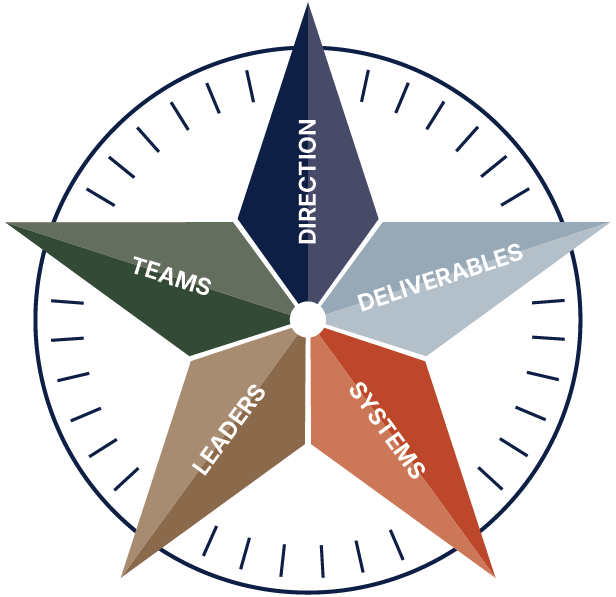
The Grounded Growth Compass is the lens I use to look across five connected areas of the business - Direction, Deliverables, Systems, Leaders and Team Ownership, to understand where the gap may be forming and what needs attention.
Explore each element below.
-
When the gap is forming, people may not be on the same page about where the business is going, what matters most or how priorities should guide everyday decisions.
When Direction is stronger, there is shared clarity about where the business is going and what matters most, and that clarity guides decisions across the business.
-
When the gap is forming, people may be busy but still unclear about what actually needs to be delivered, what takes priority or who owns what.
When Deliverables are stronger, people know what needs to be achieved, what comes first and who owns what.
-
When the gap is forming, meetings can take up a lot of time without clear decisions, actions or ownership, and follow-through can be inconsistent.
When Systems are stronger, meetings lead to clear decisions and actions, ownership is clear, and progress is made and reviewed.
-
When the gap is forming, leaders can spend too much time chasing, fixing and stepping back into the work because expectations, accountability and follow-through are inconsistent.
When leadership is stronger, leaders set clear expectations, make aligned decisions and create accountability, without having to keep stepping in to make things happen.
-
When the gap is forming, people can be focused on their own tasks or areas without seeing how their work connects to the bigger picture or taking ownership of shared outcomes.
When Teams are stronger, people understand how their work contributes, work together around shared outcomes and take ownership of delivering them.
The Grounded Growth Five Point Compass
Mapping the elements that connect Strategy to Execution
Where the work may focus
Depending on where the gap is forming, the work will usually begin in one or more of three core areas.
You do not need to know which area you need before we talk. We start by understanding what is happening in the business, then focus the work where it will make the greatest difference.

Strategic Direction & Priorities
Direction + Deliverables
When the business needs to develop or strengthen its strategic direction, clarify the key choices and priorities, or create greater alignment around what matters most.
The work may include:
Developing or strengthening strategic direction and priorities
Working through key strategic questions and decisions with the Board and executive team
Creating alignment across the Board, executive and leadership teams around direction and priorities
Translating strategic direction into clear outcomes and priorities that guide decisions and action

Commitments &
Ways of Working
Deliverables + Systems
When the direction and priorities are clear, but they have not yet been translated into clear commitments - what will be delivered, who owns what, and how the work will get done.
The work may include:
Turning strategic priorities into clear commitments, actions and ownership
Clarifying roles, responsibilities and who decides what
Strengthening meetings and operating rhythms so decisions turn into action
Improving how priorities, decisions and progress are communicated across the business
Putting practical ways in place to review progress, learn and adjust

Leadership &
Accountability
Leaders + Teams
When leaders and teams need to work together more effectively, expectations and accountability are not clear or consistent, or too much still depends on senior leaders to keep things moving.
The work may include:
Strengthening leadership capability around business priorities and challenges
Creating greater consistency in leadership expectations, decisions and behaviour
Strengthening accountability, conversations and follow-through amongst individuals
Helping teams work effectively within and across teams to deliver shared outcomes
Building greater ownership of results across the business
The three areas are connected, and the work may move across them as different needs emerge.

What would stronger execution make possible in your business?
The aim is not more activity. It is a business that can turn strategic direction into clearer decisions, consistent action and stronger results.
-
The direction and priorities are understood consistently across the business, so people make aligned choices and focus their efforts on the same outcomes.
-
People have the clarity and authority to make decisions and take responsibility at the right level, reducing bottlenecks and unnecessary reliance on senior leaders.
-
Problems are worked through properly, actions are clear and people follow through on what has been agreed.
-
People focus their time and energy on the work that moves the business forward, and that effort produces stronger results.
-
Systems, meetings and operating rhythms support the size and complexity of the business, making it easier for people to get the work done.

Every engagement is shaped around what your business needs to achieve.
It may begin with a focused piece of work or continue over time where the need is broader or more interconnected.
Whether you need to develop or strengthen your strategic direction or understand why an existing strategy is not delivering the results you expected, the first step is a complimentary 30-minute Discovery Conversation.